
What Dogs Are Actually Getting From Play and Problem-Solving Activities


The Science Behind Dog Play
What Actually Happens in a Dog's Brain During Play
When your dog engages in play — whether they are chasing a frisbee, wrestling with a tug rope, nosing through a treat puzzle, or searching for kibble in a snuffle mat — their brain is not just passing time. It is working.
Play lights up systems involved in motivation, attention, movement, reward, emotion, and learning. That matters, because every game you play with your dog is doing more than burning energy. It is shaping how your dog thinks, feels, learns, and responds to the world around them (Panksepp, 2011; Sommerville et al., 2017).
Dopamine plays an important role here. It is heavily involved in anticipation, motivation, reward prediction, and learning. That does not mean every ball toss creates a simple "dopamine surge" like flipping a neurochemical light switch. The brain is not a vending machine, unfortunately. But it does mean that successful play and problem-solving can strengthen the dog's desire to try, persist, and repeat behaviors that lead to satisfying outcomes (Panksepp, 2011; Coria-Avila et al., 2022).
This is why play is so powerful in training. When a dog successfully retrieves a ball, solves a puzzle, finds hidden food, or wins a tug game within clear rules, the brain learns: "Trying works." That lesson matters far beyond the toy in front of them.
Positive play can also help dogs settle afterward, but not simply because they are physically tired. A good enrichment session gives the brain meaningful work. It allows the dog to use attention, problem-solving, movement, scent, social engagement, and emotional regulation together. That is why a dog who has had appropriate enrichment often looks calmer and more satisfied afterward — not just exhausted, but fulfilled (Sommerville et al., 2017).
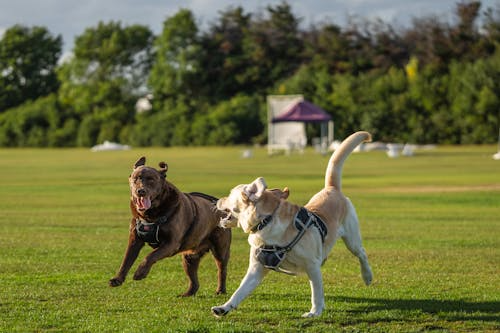
Play also exercises the mental skills dogs use in everyday life: focus, impulse control, flexible thinking, persistence, decision-making, and recovery after frustration. This is significant. Play is not passive entertainment. It is an active cognitive workout that helps your dog practice navigating the world.
Perhaps most remarkable is what neuroscientist Jaak Panksepp identified as the SEEKING system — a primary emotional system in mammals that drives exploration, investigation, and engagement with the environment. He also described PLAY as its own emotional system. Good enrichment often brings these systems together: the dog is exploring, trying, chasing, searching, solving, and connecting. When your dog is in the middle of a well-matched play or problem-solving activity, they are not just entertained. They are using the very systems that help them feel alive, curious, and engaged (Panksepp, 2011).
Play Is Not One-Size-Fits-All
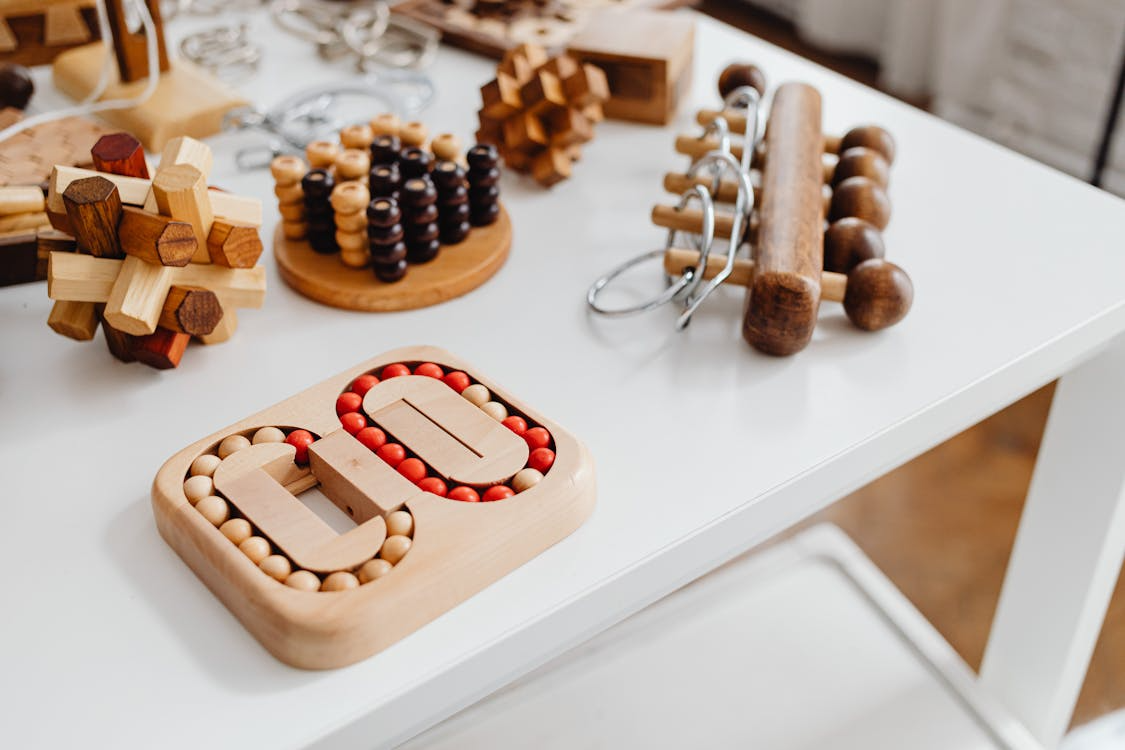
One of the most common mistakes dog owners make is assuming all play is interchangeable.
It is not.
A game of tug, a dog-dog chase game, a snuffle mat, a fetch session, a flirt pole, a puzzle feeder, and a slow sniff walk may all count as enrichment, but they do not work the brain and body in the same way. Dogs engage in different types of play, and each type serves a different purpose.
- Social play involves interaction with other dogs or humans — wrestling, chasing, play-bowing, taking turns, and adjusting intensity. When it is safe and well-matched, this type of play can build communication skills, emotional regulation, trust, and social confidence.
- Object play centers on toys, balls, tug ropes, flirt poles, and chew items. It gives dogs an outlet for grabbing, chasing, holding, tugging, shaking, or retrieving. For many dogs, object play satisfies pieces of the predatory motor sequence in a safe and structured way.
- Locomotor play includes running, leaping, spinning, zooming, and rapid changes in direction. This type of play supports physical development, coordination, and the release of pent-up physical energy.
- Predatory-style play mimics pieces of the hunt sequence: orienting, stalking, chasing, pouncing, grabbing, and dissecting. For high-drive dogs, this can be one of the most satisfying forms of play when it is channeled appropriately.
Breed wiring matters enormously here — but breed is a starting point, not a prison sentence. The American Kennel Club's breed enrichment guidance is a useful reference for understanding which activities align with your dog's genetic heritage.
A Border Collie may find endless fetch less satisfying than a game that involves movement, direction changes, and handler communication. A Beagle may ignore a fancy puzzle feeder but come alive when asked to follow a scent trail. A terrier may need legal outlets for digging, shredding, tugging, or hunting-style games. A retriever may find carrying and retrieving deeply satisfying in a way another dog simply does not (Mehrkam et al., 2017).
Matching the type of play to your dog's breed heritage and individual temperament is what separates "I bought my dog a toy" from "I gave my dog the kind of enrichment their brain was built to enjoy."
Did You Know? A Border Collie and a Basset Hound presented with the same puzzle toy may approach it using completely different strategies — and may get entirely different levels of satisfaction from it. Enrichment works best when it speaks to the dog in front of you, not the imaginary average dog from the back of a toy package.
Mental Benefits: What Problem-Solving Does for the Dog Brain
Builds Cognitive Flexibility and Adaptive Thinking
Puzzle feeders do not just keep dogs busy. Used correctly, they teach persistence, problem-solving, and flexible thinking.
Dogs that regularly work through manageable challenges learn an important lesson: when one strategy does not work, try another. Push it. Paw it. Sniff it. Roll it. Wait. Try again. That is cognitive flexibility — the ability to adjust behavior when the first approach fails.
This is observable in real life. A dog accustomed to gentle problem-solving is often more willing to investigate a new object, enter a new space, try a new cue, or recover after mild frustration. They have learned, through repeated enrichment experiences, that challenges are solvable and that effort can pay off.
This adaptive thinking transfers directly to training. Dogs who have practiced problem-solving may approach new training tasks with more confidence, more persistence, and less panic when something is unfamiliar.
This does not mean puzzle toys magically make dogs smarter. It means they give the brain practice doing the things learning requires: attending, trying, adjusting, remembering, and persisting.
Research in aging dogs supports this broader principle. In aged beagles, behavioral enrichment helped preserve learning ability, and enrichment combined with dietary support produced stronger benefits on some cognitive tasks than either intervention alone (Milgram et al., 2005). The practical takeaway is simple: brains benefit from meaningful work.
Each novel toy, new scent trail, or unfamiliar puzzle gives the dog's brain a new problem to solve. Over time, these repeated challenges support neuroplasticity — the brain's ability to adapt through experience. The exact changes depend on age, health, genetics, and the type of enrichment, but the larger point is clear: the brain is shaped by what it is asked to do.
Reduces Risk and Severity of Age-Related Cognitive Decline
This is one of the most underappreciated benefits of enrichment — and one of the most urgent.
Canine Cognitive Dysfunction Syndrome, often called CDS or CCD, is a neurodegenerative condition seen in many older dogs. Symptoms can include disorientation, disrupted sleep-wake cycles, house-soiling, loss of learned behaviors, reduced social interaction, increased anxiety, and changes in activity level. Understanding your dog's expected lifespan — which varies considerably by breed and size — can help you plan an enrichment strategy that supports their brain across every stage.
Petzooie's vet-authored guide on how long dogs live by breed is a practical starting point for that planning.
Estimates vary depending on age and diagnostic method, but one large survey found signs consistent with canine cognitive dysfunction in 14.2% of dogs over eight years old, with evidence that the condition is often underdiagnosed (Salvin et al., 2010). Other reviews report higher rates in older age groups, especially as dogs move into advanced senior years (Chapagain et al., 2018; MacQuiddy et al., 2022).
This is heartbreaking to witness. It is also not something enrichment can magically prevent. That would be too strong. But cognitive decline does appear to be modifiable. Long-term studies in dogs suggest that mental enrichment, physical activity, diet, and environmental management can help preserve aspects of learning and cognitive performance (Milgram et al., 2005; Head et al., 2009).
The better way to say it is this: enrichment does not guarantee that an older dog will avoid cognitive decline, but an actively engaged brain is likely better protected than a brain left idle.
Veterinary behavior and neurology approaches to cognitive decline commonly include mental enrichment, predictable routines, physical activity, medical evaluation, environmental support, and sometimes medication or dietary intervention. Starting early matters. Starting later still matters.
Senior enrichment does not need to be intense. A senior dog does not need to launch into an agility career at twelve. Low-impact scent games, lick mats, gentle puzzle feeders, slow trick training, and calm interactive play can keep aging brains engaged without putting unnecessary stress on older joints.
Enrichment for senior dogs does not need to be dramatic to be meaningful. Sometimes the best brain game is simply letting an old dog sniff a new patch of grass like it contains state secrets.
Improves Focus, Learning, and Training Retention
There is also a practical, day-to-day dimension to enrichment that good trainers have used for years: enrichment can prime the brain for learning.
Problem-solving activities engage attention in a focused, controlled way. For many dogs, a short scent game, puzzle feeder, or food-search activity before training helps them become more settled, more available, and more ready to work.
The key phrase is "for many dogs." Some dogs become too excited or frustrated by certain puzzles before training. Others become calmer and more focused. The activity has to fit the dog. For more expert-led guidance on pairing enrichment with training goals, Petzooie's dog training resource library covers a wide range of practical approaches.
For the right dog, a short enrichment session before training can help shift the brain from scattered energy into focused engagement. That is why many trainers use nose work, structured play, or simple food-search games as part of a training plan.
Dogs living an enrichment-rich lifestyle also get regular practice with persistence and frustration tolerance. These skills matter during training. A dog that knows how to work through small challenges is often better prepared to learn new behaviors, generalize those behaviors to new settings, and recover when the environment becomes distracting.
Actionable Tip: Try offering a short scent-based activity before your next training session. Scatter a small portion of your dog's meal in a snuffle mat, hide a few treats around one room, or let them search for kibble in a rolled towel. Keep it easy enough that your dog succeeds without becoming frantic. For many dogs, 5–10 minutes of sniffing and problem-solving can improve focus before training.
Emotional Benefits: More Than a Happy Dog
Play as a Stress and Anxiety Regulator
Anxiety-related behaviors are among the most common welfare and behavior concerns in companion dogs. In a large owner-reported study of 13,700 Finnish pet dogs, 72.5% of dogs showed at least one anxiety-related behavior, and noise sensitivity was the most common anxiety-related trait, reported in 32% of dogs (Salonen et al., 2020).
That does not mean every dog has a clinical anxiety disorder. But it does mean anxiety-related behavior is common, and it deserves to be taken seriously.
Anxiety can contribute to separation-related distress, noise phobia, reactivity, aggression, compulsive behavior, hypervigilance, and a wide range of behaviors owners often describe as "problem behaviors." Many of these are better understood as symptom behaviors — external expressions of internal dysregulation.
The connection between enrichment and stress is real, but it is not magic. In shelter and kennel studies, structured enrichment — including scent, food-based, social, tactile, and auditory enrichment — has been associated with improved welfare indicators and reductions in some stress-related behaviors (Amaya et al., 2020; Hunt et al., 2022; Dare et al., 2023).
Some studies have looked at cortisol, the primary stress hormone, but the effect depends heavily on the dog, the environment, and the type of enrichment. A snuffle mat may calm one dog. A flirt pole may send another dog into orbit. Same category, very different nervous system outcome.
Under-stimulated dogs may show frustration, restlessness, barking, destructive behavior, attention-seeking, difficulty settling, or over-arousal. Their brains and bodies are built for activity and engagement. When those needs are not met, the result can be a dog that is simultaneously bored and anxious — a deeply annoying and deeply understandable combination.
That said, enrichment should not be used as a lazy explanation for everything. Pain, gastrointestinal discomfort, poor sleep, fear, genetics, trauma, separation distress, and medical issues can all produce behavior that looks like "boredom." Enrichment is often one of the most useful first-line changes, but severe, escalating, aggressive, self-injurious, or panic-based behaviors need professional assessment.
Enrichment plays a particularly important role in shelter dog welfare. Dogs arriving at shelters may show anxiety, frustration, shutdown, pacing, barking, or reduced social engagement because the environment is stressful and restrictive. Structured enrichment programs — puzzle feeders, scent games, controlled social play, predictable routines, and calm human engagement — can improve welfare indicators and help dogs cope more successfully (Amaya et al., 2020; Dare et al., 2023; Hunt et al., 2022). The ASPCA's dog care resources offer additional guidance on supporting dogs through environmental stress, including enrichment-based approaches used in shelter rehabilitation programs.
What works in shelters often works in living rooms: dogs need something meaningful to do.
Confidence Building Through Problem-Solving
Confidence is not built by telling a dog they are fine.
Confidence is built when the dog discovers, repeatedly, that they can handle what is in front of them.
There is a concept in animal behavior science called learned helplessness — a state in which an animal stops trying to influence its environment because past experience has taught it that nothing it does matters. That specific term comes from experimental work involving uncontrollable aversive experiences, so it should not be casually slapped onto every under-enriched dog like a diagnostic sticker.
But the broader principle is important: control matters.
Dogs generally cope better when they can predict events, influence outcomes, and succeed through their own behavior. A dog who works through a puzzle, follows a scent trail, finds hidden food, or masters a new trick experiences earned success. Not free praise. Not random treats. Earned success.
That matters.
Earned success teaches the dog: "My behavior can make things happen." For anxious, cautious, or easily overwhelmed dogs, that lesson can be powerful. It can help them become more willing to investigate novelty, recover after small startles, and keep trying when something is unfamiliar.
The goal is not to frustrate the dog into toughness. That is not confidence-building; that is just stress with branding. The goal is to create solvable challenges that allow the dog to win.
Emotional Bonding With Their Owner
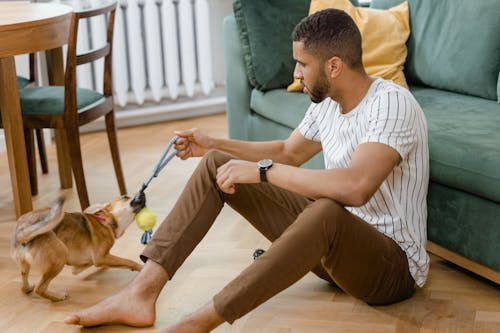
Interactive play is one of the fastest, most natural ways to build mutual trust — long before any formal training begins.
Play is one of the original languages of the dog-human relationship. Before obedience. Before "leave it." Before leash mechanics. Before behavior plans. There was play.
Interactive play creates a context in which your dog experiences you as a source of joy, safety, predictability, and engagement — not simply as a rule-enforcer or a food dispenser. This changes the emotional tone of the relationship.
A dog who sees their owner as a trusted play partner is often more eager to engage, more responsive during training, and more willing to check in when the world gets complicated.
Even forms of play that look rough — tug of war, chase, wrestling — can be beneficial when practiced with clear rules and good arousal control. The concern that tug-of-war automatically teaches "dominance" is not supported by current evidence. In experimental studies, tug games did not increase dominance-related dimensions of the dog-human relationship, although the game still needs boundaries, safe mouth behavior, and the ability to pause or end when needed (Rooney & Bradshaw, 2002; Rooney & Bradshaw, 2003).
The problem is not tug. The problem is chaotic tug with no rules, no release cue, no arousal control, and human fingers offered as bonus equipment.
When done well, tug can teach impulse control, turn-taking, cooperation, and social trust.
Case Study — Milo: Milo, a four-year-old rescue mix, arrived in his adoptive home showing classic anxiety-related behaviors: pacing, inability to settle, hypervigilance, and refusal to engage with toys. His adopter introduced a 15-minute daily enrichment routine, alternating between a snuffle mat, a lick mat, and short chase-play sessions. The games were easy, predictable, and low-pressure. Within six weeks, Milo began initiating play, showing looser body posture in the evenings, and sleeping more consistently through the night. The turning point was not one dramatic intervention. It was consistent, predictable enrichment that gave Milo's brain a safe job and his body a rhythm he could trust.
Behavioral Benefits: The Enrichment-Behavior Connection
Boredom Is Not the Root of All "Bad" Behavior — But It Is a Big One
That shredded cushion is not necessarily defiance.
It may be a dog telling you, in the only way they know how, that their brain needs more to do.
Many common behavior complaints — destructive chewing, excessive barking, digging, counter-surfing, jumping, attention-seeking, and indoor hyperactivity — can be worsened by unmet behavioral needs. Dogs are not born destructive. They are born with drives to chew, move, sniff, forage, chase, investigate, and solve problems.
When those needs have nowhere constructive to go, they find their own outlet. Your baseboards. Your shoe collection. Your garbage can. Your couch.
The behavior is not always the whole problem. Sometimes the behavior is the smoke, and under-enrichment is part of the fire.
This reframing matters enormously for how owners respond. Punishing a bored or frustrated dog for chewing may suppress the immediate behavior without meeting the underlying need. The drive to engage does not disappear. It relocates.
Taking away every outlet without replacing it is like taking away a child's pencils and then acting shocked when the walls become the canvas.
The most effective intervention is usually not correction alone. It is replacing the behavioral deficit — giving the dog a legitimate, satisfying channel for the energy, curiosity, and drive currently flowing into destructive outlets.
That said, not every behavior problem is caused by boredom. Pain, fear, anxiety, adolescence, reinforcement history, poor sleep, medical conditions, separation distress, and environmental stress can all produce behavior that looks like "acting out." If behavior is sudden, severe, escalating, aggressive, self-injurious, or panic-based, enrichment belongs in the plan — but it is not the whole plan.
Play as a Replacement Behavior Strategy
Behavioral science distinguishes between two very different training approaches: teaching a dog what not to do, and teaching a dog what to do instead.
The second approach is usually far more powerful — and play is one of its best tools.
Every dog comes with behavioral tendencies shaped by species, breed history, individual temperament, and learning. Herding, retrieving, tracking, guarding, flushing, digging, chasing, tugging, chewing, and foraging are not random hobbies. They are organized patterns of behavior.
When these drives are met through appropriate enrichment, the pressure behind some "problem behavior" can drop dramatically.
- A Malinois may need structured tug or bite-object games with clear rules.
- A Beagle may settle more easily after scent work than after generic fetch.
- A Labrador may need retrieving games, carrying outlets, and food-based puzzles to reduce obsessive mouthing or scavenging.
- A terrier may need legal digging, shredding, tugging, or hunting-style games.
These examples are not guarantees. They are starting points. But matching enrichment to the dog's likely behavioral needs often improves engagement and reduces frustration (Mehrkam et al., 2017).
The behavioral math is simple: a dog whose needs are met appropriately has less motivation to meet them inappropriately.
Social Play and Canine Communication Skills
Play between dogs is not just entertainment. In the right context, it is a classroom for canine social communication.
Well-matched social play can support motor skills, social bonding, bite inhibition, body-language fluency, and emotional regulation. Dogs learn to read play bows, pauses, soft eyes, loose bodies, role reversals, and changes in intensity. They learn when to chase, when to stop, when to disengage, and when the other dog is no longer having fun. The Humane Society of the United States provides practical guidance on structuring safe, rewarding social play environments that bring out the best in your dog's communication skills.
But social play is not automatically good.
Poorly matched play can create fear, frustration, bullying, defensive behavior, or conflict. A dog who is overwhelmed at the dog park is not "getting socialized." They are practicing stress.
Good social play should be loose, reciprocal, interruptible, and mutually enjoyable. Both dogs should take turns. Both should be able to pause. Both should be able to disengage. If one dog is always chasing and the other is always fleeing, that is not healthy play.
The goal is not more dog play. The goal is better dog play.
Research Insight: Environmental enrichment studies in dogs — especially in shelter, kennel, and assistance-dog contexts — suggest that structured enrichment can improve welfare-related behavior and reduce some stress-associated behaviors. The effects vary by dog, setting, and enrichment type, but the overall pattern is clear: dogs do better when their brains and bodies have meaningful work to do (Amaya et al., 2020; Hunt et al., 2022; Dare et al., 2023).
Types of Play and Problem-Solving Activities by Benefit
Not all enrichment activities are created equal. Matching the activity to the dog's needs is what makes the difference between a dog that is merely tired and a dog that is genuinely fulfilled.
Nose work can be especially satisfying because it combines movement, sustained attention, olfactory discrimination, memory, and problem-solving. For many dogs, a short scent-based session produces a deeper settledness than a much longer period of purely physical exercise. That does not mean "15 minutes of nose work equals one hour of running" as a universal scientific rule. It means scent work often produces a different kind of fatigue — mental fatigue.
|
|
|
|
|
|
|
|
|
|
|
|
|
|
|
|
|
|
|
|
|
|
|
|
|
|
|
|
|
|
|
|
|
|
|
|
|
|
|
|
Mental Fatigue vs. Physical Fatigue — Why This Distinction Matters
One of the most transformative concepts for dog owners to understand is the difference between physical fatigue and mental fatigue.
A one-hour jog may tire your dog's muscles. A 20-minute scent walk — where your dog is allowed to sniff, track, investigate, and make choices — may tire their brain.
Active scenting requires memory, discrimination, pattern recognition, sustained attention, and environmental processing. That is a lot of neurological work packed into what looks, from the outside, like a dog sniffing a suspicious leaf.
For many dogs — especially high-drive, anxious, elderly, adolescent, or reactive dogs — mental fatigue through enrichment can be more effective at producing calm settledness than physical exercise alone. A dog that has genuinely used their brain is often the dog who lies down and exhales deeply, not the dog who bounces off the walls the second the leash comes off.
This does not mean physical exercise is unimportant. It is essential. Dogs need movement, cardiovascular exercise, muscle use, coordination, and species-appropriate activity.
For a breed-by-breed breakdown of how much physical exercise your dog needs alongside mental enrichment, Petzooie's vet-authored guide on how much exercise dogs really need is a comprehensive and practical resource.
But enrichment provides a type of fulfillment running alone often cannot replicate. The goal is not just a tired dog. The goal is a dog whose whole self — body, brain, senses, social needs, and emotional systems — has been exercised.
How Much Enrichment Does Your Dog Actually Need?
Enrichment by Life Stage
Enrichment is not a one-size-fits-all prescription. What fulfills a four-month-old puppy may overwhelm a twelve-year-old senior. What challenges a healthy adult companion dog may barely register for a working-line adolescent herding breed in its prime.
Puppies under 12 months
The puppy brain is in a state of rapid development. Enrichment sessions should be short, frequent, positive, and highly varied. Think 5-10 minutes at a time, not hour-long puzzle marathons.
The priority at this stage is breadth of positive experience, not depth of challenge. Puppies benefit from textures, sounds, surfaces, gentle handling games, safe social experiences, simple food puzzles, short scent searches, and confidence-building exploration.
Overstimulation is a real risk. Watch for yawning, frantic biting, avoidance, sudden disinterest, displacement sniffing, or inability to settle. Those are signs to stop, not signs to make the puzzle harder.
Adult dogs ages 1-7
This is the prime enrichment window for many dogs. Adult dogs are usually cognitively capable and physically robust enough to benefit from more sustained, complex challenges.
Many adult dogs do well with roughly 20-30 minutes of dedicated mental enrichment per day, in addition to physical exercise. This should be treated as a practical starting point, not a rigid biological law.
Some dogs need less. High-drive working breeds, adolescent dogs, anxious dogs, and dogs with intense breed-specific drives may need significantly more.
The ideal plan includes a mix of cognitive challenge, scent work, physical play, social engagement, decompression, and breed-appropriate drive outlets.
Senior dogs ages 8 and older
This is when enrichment shifts from performance to preservation.
Low-impact cognitive games — scent work, lick mats, gentle puzzle feeders, slow trick training, and interactive social play — help maintain engagement without placing unnecessary strain on aging joints.
Keep sessions shorter, often 10-15 minutes, and read your dog's energy cues closely.
Senior enrichment does not need to be intense to matter. A senior dog searching for treats in a towel, choosing between two scent boxes, licking a frozen mat, or walking slowly through a new route is still using their brain. That counts.
Signs Your Dog May Not Be Getting Enough Enrichment
The following behaviors are not personality flaws. They are signals — and they deserve to be investigated. For a deeper look at what each of these signs means in practice, Petzooie's expert-reviewed guide on 10 signs your dog is bored and how to fix it covers each one with actionable solutions.
- Excessive, unprompted barking or whining
- Destructive chewing of household objects
- Hyperactivity indoors that does not resolve with physical exercise
- Persistent, escalating attention-seeking behaviors
- Escape attempts or fence-pacing
- Redirected frustration during greetings
- Lethargy, flat affect, or depression-like disengagement
- Over-grooming or repetitive self-directed behaviors
- Difficulty settling even after walks
- Constant scavenging, stealing, or searching for things to do
If several of these signs are present, your dog's enrichment plan is worth evaluating. But enrichment is only one piece of the assessment. Sleep, pain, anxiety, diet, gastrointestinal comfort, exercise, training history, separation-related distress, and environmental stress should also be considered.
If the behavior is sudden, intense, escalating, aggressive, self-injurious, or associated with panic, consult a veterinarian, certified trainer, veterinary behaviorist, or qualified behavior professional.
The 5-a-Week Enrichment Framework
Consistency is more important than intensity. A simple, sustainable framework is to rotate five activity types across the week so your dog engages different behavioral and cognitive systems.
- Scent-based activity — Snuffle mat, scatter feeding, nose work, treat searches, sniff walks. Primary benefit: foraging, focus, calming engagement, and olfactory problem-solving.
- Physical play — Fetch, tug, chase, flirt pole, structured movement games. Primary benefit: physical outlet, coordination, drive satisfaction, and owner engagement.
- Cognitive puzzle — Puzzle feeder, stuffed Kong, treat-dispensing toy, towel puzzle, cardboard-box search. Primary benefit: problem-solving, persistence, confidence, and frustration tolerance.
- Social enrichment — Owner play, playdate with a compatible dog, cooperative training, calm parallel walk, trick training. Primary benefit: bonding, communication, trust, and emotional regulation.
- Environmental exploration — New walking route, quiet park visit, sniffari, dog-safe store visit, decompression walk, novel surface exploration. Primary benefit: confidence, sensory processing, adaptability, and choice.
This rotation prevents habituation to any single activity while building a broad enrichment foundation. Your dog does not need every activity every day. They need a life with enough variety, predictability, and meaningful choice to keep their brain engaged.
Conclusion
Play is not a luxury your dog earns when life is convenient.
It is not a reward for good behavior or a rainy-day activity when you run out of other things to do.
Play and enrichment are biological, emotional, and behavioral needs — as fundamental to your dog's welfare as nutrition, veterinary care, sleep, and physical exercise.
The science is clear on the larger point: dogs need more than food, walks, and obedience cues. Consistent, varied, breed-appropriate enrichment supports welfare, learning, confidence, emotional regulation, and the dog-human bond (Sommerville et al., 2017; Hunt et al., 2022).
Dogs who receive thoughtful enrichment are often calmer, more focused, more resilient, and more connected to their owners. Dogs who do not receive enough appropriate enrichment may become restless, frustrated, anxious, destructive, or emotionally dysregulated — and they tell us so in every way available to them.
The wall-climbing, the furniture-shredding, the constant barking, the never-ending need — these are not character flaws. They are requests. They are a brilliant animal asking, in the only language they have, for something meaningful to do with their capable, working mind.
You do not need an agility course in your backyard. You do not need a certification in nose work. You do not need expensive puzzle toys or hours of free time each day.
You need to start. Today. With what you have.
Toss their breakfast kibble across the grass and let them sniff for it. Hide around a corner and call them. Stuff a Kong with part of their meal and let them work it out. Roll a tennis ball down the hallway. Scatter treats into a towel. Let them choose the direction of one walk.
Watch what happens when your dog's brain finally gets to be on.
That is where you will find them — not in the destruction, not in the anxiety, not in the chaos — but in the focused, joyful, fully alive moment of a problem being solved.
Frequently Asked Questions
Does playing with my dog actually make them smarter?
Yes — in the practical sense. Play and enrichment strengthen the cognitive skills dogs use to learn: attention, persistence, flexible thinking, body awareness, social communication, and problem-solving. It is more accurate to say that play exercises the brain than to say it magically makes dogs smarter.
How much mental stimulation does a dog need per day?
Many adult dogs benefit from roughly 20-30 minutes of dedicated mental enrichment per day, in addition to physical exercise. However, this is a practical starting point, not a rigid rule. Age, breed history, health, temperament, anxiety level, and lifestyle all affect how much enrichment a dog needs.
Can mental stimulation replace physical exercise for dogs?
No. Dogs need both. Physical exercise supports cardiovascular health, muscle tone, coordination, and general well-being. Mental enrichment provides cognitive and emotional fulfillment that physical exercise alone may not provide. The ideal plan includes both body work and brain work.
What is the best enrichment activity for an anxious dog?
Scent-based activities are often an excellent starting point for anxious dogs because sniffing encourages focused, low-pressure engagement with the environment. Snuffle mats, scatter feeding, easy nose work, and slow sniff walks are often useful. However, the best activity is the one your individual dog finds calming rather than frustrating.
When should I start enrichment activities with my dog?
As early as possible, but gently. Puppies benefit enormously from short, positive enrichment experiences that build confidence and flexibility. Senior dogs also benefit, especially from low-impact cognitive activities. It is never too late to begin, but the activity should always match the dog's age, health, and emotional state.
Can enrichment help with reactivity?
Yes, but it is not a standalone treatment. Enrichment can lower baseline frustration, improve recovery, build confidence, and give the dog appropriate outlets for energy and investigation. Reactive dogs still need a structured behavior modification plan that includes management, trigger-distance work, counterconditioning, skill-building, and owner coaching.
Is tug-of-war bad for dogs?
No, not when it is played appropriately. Tug can build impulse control, confidence, and owner-dog connection. The key is structure: the dog should be able to release the toy, pause, restart, and keep their mouth on the toy rather than on human hands. Tug is not a dominance problem; it is a rules problem if the game is poorly managed.
Are puzzle toys enough enrichment by themselves?
Usually not. Puzzle toys are useful, but they are only one category of enrichment. Dogs also need movement, sniffing, social interaction, chewing, exploration, rest, and breed-appropriate outlets. A dog can have five puzzle toys and still be under-enriched if the rest of their behavioral needs are not being met.
References
Amaya, V., Paterson, M. B. A., & Phillips, C. J. C. (2020). Effects of olfactory and auditory enrichment on the behaviour of shelter dogs. Animals, 10(4), 581. https://doi.org/10.3390/ani10040581
Chapagain, D., Range, F., Huber, L., & Viranyi, Z. (2018). Cognitive aging in dogs. Gerontology, 64(2), 165-171. https://doi.org/10.1159/000481621
Coria-Avila, G. A., Pfaus, J. G., Orihuela, A., Dominguez-Oliva, A., Jose-Perez, N., Hernandez, L. A., & Mota-Rojas, D. (2022). The neurobiology of behavior and its applicability for animal welfare: A review. Animals, 12(7), 928. https://doi.org/10.3390/ani12070928
Dare, P., Strasser, R., & Hemsworth, P. H. (2023). Ruff morning? The use of environmental enrichment during the morning routine of shelter dogs. Animals, 13(9), 1507. https://doi.org/10.3390/ani13091507
Head, E., Nukala, V. N., Fenoglio, K. A., Muggenburg, B. A., Cotman, C. W., & Sullivan, P. G. (2009). Effects of age, dietary, and behavioral enrichment on brain mitochondria in a canine model of human aging. Experimental Neurology, 220(1), 171-176.
Hunt, R. L., Whiteside, H., & Prankel, S. (2022). Effects of environmental enrichment on dog behaviour: Pilot study. Animals, 12(2), 141. https://doi.org/10.3390/ani12020141
MacQuiddy, B., & others. (2022). Assessment of risk factors in dogs with presumptive advanced canine cognitive dysfunction. Frontiers in Veterinary Science.
Mehrkam, L. R., Hall, N. J., Haitz, C., & Wynne, C. D. L. (2017). The influence of breed and environmental factors on social and solitary play in dogs. Learning & Behavior, 45, 367-377.
Milgram, N. W., Head, E., Zicker, S. C., et al. (2005). Learning ability in aged beagle dogs is preserved by behavioral enrichment and dietary fortification. Neurobiology of Aging, 26(1), 77-90.
Panksepp, J. (2011). The basic emotional circuits of mammalian brains: Do animals have affective lives? Neuroscience & Biobehavioral Reviews, 35(9), 1791-1804. https://doi.org/10.1016/j.neubiorev.2011.08.003
Rooney, N. J., & Bradshaw, J. W. S. (2002). An experimental study of the effects of play upon the dog-human relationship. Applied Animal Behaviour Science, 75(2), 161-176.
Rooney, N. J., & Bradshaw, J. W. S. (2003). Links between play and dominance and attachment dimensions of dog-human relationships. Journal of Applied Animal Welfare Science, 6(2), 67-94.
Salonen, M., Sulkama, S., Mikkola, S., et al. (2020). Prevalence, comorbidity, and breed differences in canine anxiety in 13,700 Finnish pet dogs. Scientific Reports, 10, 2962. https://doi.org/10.1038/s41598-020-59837-z
Salvin, H. E., McGreevy, P. D., Sachdev, P. S., & Valenzuela, M. J. (2010). Under diagnosis of canine cognitive dysfunction. The Veterinary Journal, 184(3), 277-281.
Sommerville, R., O'Connor, E. A., & Asher, L. (2017). Why do dogs play? Function and welfare implications of play in the domestic dog. Applied Animal Behaviour Science, 197, 1-8. https://doi.org/10.1016/j.applanim.2017.09.007


Comments
No comments yet. Be the first to share your thoughts.