
10 Signs Your Dog Is Bored (and How to Fix It with Mental Stimulation Toys)


Why Dog Boredom Is a Serious Issue
Dogs are smart and social animals. Most need between 30 minutes and 2 hours of mental and physical activity each day. Without enough stimulation, signs of boredom become obvious.
Boredom in dogs often appears as 'bad behavior.' Many owners punish these actions, not realizing the real issue is boredom. A bored dog is just frustrated and trying to entertain themselves.
In this guide, you will find the 10 most telling signs your dog is bored, plus a breakdown of the best mental stimulation toys that can transform your dog's behavior, mood, and well-being, often in just 15 minutes a day.
Sign 1: Destructive Chewing
Coming home to shredded pillows, gnawed furniture legs, or destroyed shoes? Your dog is not being malicious. They are self-soothing from boredom. Chewing releases endorphins, making it one of the most satisfying coping mechanisms for an under-stimulated dog.
This often happens in high-energy breeds bred to work. Without something to do, your belongings become their targets.
Quick Fix: Stuff a Kong with frozen peanut butter or kibble to redirect chewing and keep your dog busy for up to 40 minutes.
Sign 2: Excessive Barking or Whining
A dog barking at nothing—a wall, a shadow, thin air—is often desperately seeking stimulation. Bored dogs may also whine persistently to communicate restlessness and frustration to their owners.
While some vocalization is completely normal, a sudden or significant increase in barking paired with other signs in this list is a strong indicator that your dog needs far more mental engagement throughout the day.
Quick Fix: Try a sniff walk. Let your dog lead and smell everything they want. Activating the scent brain is as mentally exhausting as a physical jog, and most dogs find it satisfying.
Sign 3: Digging and Attempting to Escape

If your dog constantly digs up the garden or searches the fence for weak points, this escape behavior often comes from boredom and an unmet drive to explore. Digging and escaping fulfill a deep behavioral need.
Terriers and scent hounds especially enjoy digging and tracking. If they don't have an outlet, they'll use your yard to burn off their energy and curiosity.
Quick Fix: Create a digging sandbox in your yard, or use a snuffle mat indoors so your dog can hunt for food with their nose. This satisfies the exploration drive in a safe and rewarding way.
Sign 4: Restlessness and Pacing
A restless dog who paces or cannot settle often needs more mental stimulation. It is like a bored person pacing.
Ongoing restlessness can become anxiety. Early enrichment supports your dog's long-term mental health.
Quick Fix: Schedule enrichment sessions at the same time each day. Dogs thrive on routine, and regular mental exercise helps regulate their nervous system.
Sign 5: Excessive Attention-Seeking
A bored dog demands constant attention by pawing, barking, or sitting on your laptop. This signals a need for engagement, not disrespect.
When physical proximity becomes constant and compulsive, it signals your dog has not learned to entertain themselves and relies on human interaction for all stimulation.
Quick Fix: Before your workday, set aside 15 minutes for an interactive puzzle toy with your dog. A mentally exercised dog is calm and content for hours afterward.
Sign 6: Eating Too Fast or Food Obsession
Eating too fast, lingering in the kitchen, or stealing food can show your dog seeks stimulation from eating.
In the wild, dogs would spend hours foraging and problem-solving to find each meal. When mealtime is over quickly, they lose one of the most enriching daily activities. Frustration and compulsive food-seeking often follow.
Quick Fix: Ditch the food bowl. Use a slow-feeder or treat-dispensing puzzle toy to turn every meal into a 15 to 20-minute brain workout. This also reduces the risk of bloat.
Sign 7: Excessive Licking or Self-Grooming
If allergies and skin conditions are ruled out, compulsive licking, especially of paws, legs, or household surfaces, may signal boredom or low-level chronic stress. Over time, repetitive self-licking from under-stimulation can lead to Acral Lick Dermatitis in some dogs.
Licking soothes dogs, just as people fidget or scroll on their phones when bored.
Quick Fix: A lick mat with dog-safe peanut butter, banana, or plain Greek yogurt gives the licking instinct a healthy outlet and activates the calming parasympathetic nervous system.
Sign 8: Stealing and Guarding Objects
Does your dog steal socks, the remote, or anything nearby? This playful behavior says, "Engage with me!" Stealing reliably brings your attention.
Resource-guarding can intensify in chronically bored dogs who fixate on objects as substitutes for enrichment and mental engagement.
Quick Fix: Teach the trade cue with high-value treats, and channel the retrieving instinct into fetch games or interactive tug play. This gives the behavior a positive outlet.
Sign 9: Lethargy or Signs of Canine Depression
Not all bored dogs act out. Some become withdrawn, sleep more, ignore walks and toys, or seem dull. Ongoing boredom can even lead to canine depression, which is real and treatable.
Most healthy dogs sleep 12 to 14 hours a day. If your dog sleeps more than 18 hours or seems withdrawn, boredom may have turned into depression.
Quick Fix: Add something new, like a fresh toy, a new walking route, or a different puzzle game. New experiences spark your dog's curiosity and help them feel more interested in their surroundings.
Sign 10: Sudden Hyper Energy Bursts (Zoomies)
Zoomies, or sudden bursts of energy, are normal. But if they happen often, your dog may have too much unused mental and physical energy from boredom.
It's like a pressure valve letting off steam. If your dog gets zoomies several times a day for no reason, they need a regular enrichment routine to use up their mental energy.
Quick Fix: Plan a 20-minute brain game in the afternoon to help prevent intense zoomies later. This can greatly reduce wild energy in the evening.
Best Mental Stimulation Toys to Fix Dog Boredom

The best toy for your dog depends on their breed, size, and what kind of challenge they enjoy. Here are the top types for 2026.
Puzzle Feeders and Interactive Puzzles: These toys let dogs solve problems to find hidden treats. Nina Ottosson's Level 1 to 4 puzzles grow with your dog's skills. Start simple and increase the challenge as they learn. They're great for all sizes, indoor play, and mealtime.
Kong Classic and Stuffable Toys: These are top choices for beating boredom. Fill them with frozen kibble, peanut butter, or banana and freeze overnight. They keep dogs busy for 20 to 40 minutes and are great for solo play at any age.
Snuffle Mats and Nosework Kits: These toys use your dog's strong sense of smell. Hiding kibble in a snuffle mat lets them use their nose and brain at the same time. Scent work is very tiring and calming for most dogs.
Treat-Dispensing Balls and Rollers: Dogs roll and push these toys to get kibble out. This combines light exercise with problem-solving, making them perfect for high-energy dogs who need both mental and physical activity.
Lick Mats: Spread dog-safe peanut butter, plain yogurt, or wet food on these mats. Licking helps dogs relax and is great for anxious or stressed pets. Freeze them for longer-lasting fun.
Smart Automated Interactive Toys (2026 Top Pick): App-controlled treat dispensers, laser toys, and AI games have gotten much better in 2026. They offer real enrichment and are great for busy owners. While they can't fully replace active play, they're a helpful addition to your dog's routine.
6 Expert Tips to Prevent Dog Boredom
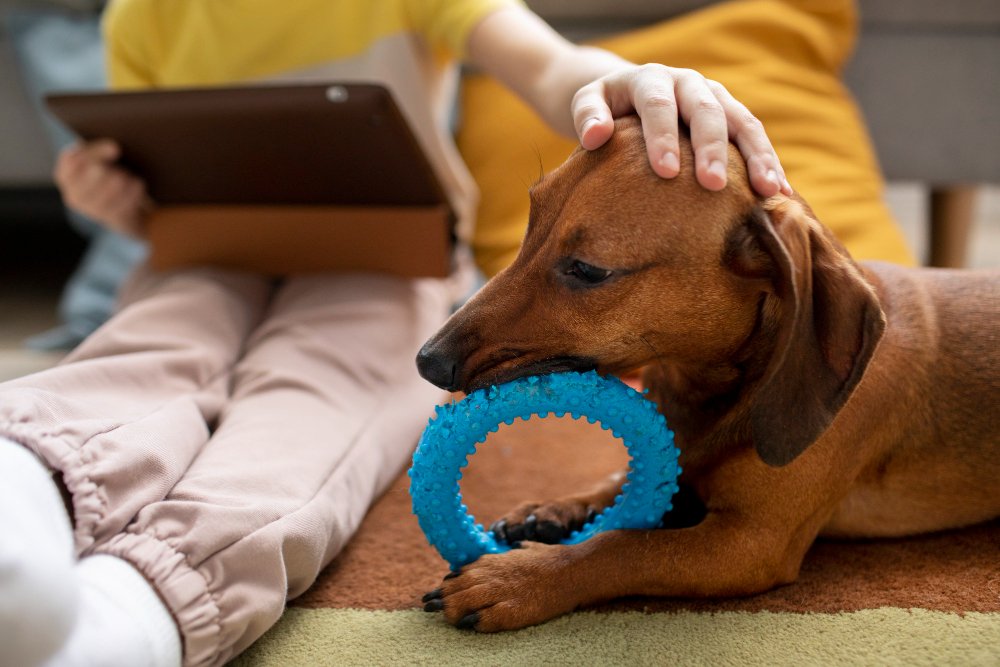
Rotate your dog's toys each week. Only leave out 2 or 3 at a time. When you bring out a toy after a week, it feels new and exciting, keeping your dog's interest much longer than if all toys are always available.
Stop using a regular food bowl and feed your dog with enrichment toys. Meals are a great chance for mental activity. Puzzle feeders, snuffle mats, or Kongs turn eating into a 20-minute brain workout without extra cost.
Plan a daily sniff walk. Let your dog lead and sniff as much as they want on at least one walk each day. A 20-minute sniff walk is more mentally tiring and satisfying than a longer, structured walk for most dogs.
Teach your dog a new trick every two weeks. Short, 5-minute training sessions are powerful enrichment. Learning new things challenges your dog's brain, builds confidence, reduces boredom, and strengthens your bond.
Choose toys that fit your dog's breed instincts. Herding dogs like games with movement and chasing. Scent hounds enjoy snuffle mats and nosework. Retrievers do best with fetch toys. Matching activities to your dog's natural drives makes enrichment more effective and engaging.
Give your dog mental stimulation before stressful events like storms, vet visits, fireworks, or guests. Offer a lick mat or puzzle toy about 30 minutes ahead of time. This helps your dog stay calmer during these situations.
Frequently Asked Questions
How can I tell if my dog is bored versus anxious?
Both conditions share some symptoms, but anxiety typically involves specific and identifiable triggers such as storms or separation, and physical signs like trembling or excessive panting. Boredom manifests more as attention-seeking, mischief, and general restlessness without a defined fear trigger. A veterinarian or a certified animal behaviorist can help you accurately differentiate the two.
How much mental stimulation does a dog need per day?
Most adult dogs benefit from 30 to 60 minutes of active mental stimulation daily, ideally split into 2 or 3 shorter sessions. High-energy working breeds like Border Collies, Belgian Malinois, and Siberian Huskies may need 60 to 90 minutes each day. Keep in mind that 15 minutes of a genuinely challenging puzzle game can be as mentally tiring as a full hour of physical exercise.
What are the best mental stimulation toys for dogs in 2026?
Top-rated options include Nina Ottosson puzzle feeders as a great all-around choice, Kong Classic for solo play, snuffle mats for scent-driven dogs, lick mats for anxious dogs, and treat-dispensing balls for high-energy breeds. Always begin at a lower difficulty level and gradually increase the challenge as your dog improves, to avoid frustration and disengagement.
Can mental stimulation replace physical exercise for dogs?
Mental and physical exercise are both essential, and they complement rather than replace each other. Mental stimulation is particularly valuable on days when physical exercise is limited due to bad weather, injury, or post-surgery recovery. Most behavioral experts recommend combining both forms of enrichment daily for optimal physical and psychological well-being.
Why does my dog lose interest in toys so quickly?
Habituation is a completely natural process. Dogs lose interest in the same stimulus when repeatedly exposed to it. Rotating a collection of 5 to 6 toys weekly effectively maintains novelty. You can also progressively increase the difficulty level of puzzle toys as your dog masters each stage, keeping engagement and challenge consistently high over time.
Final Thoughts: A Bored Dog Is a Message, Not a Problem
What looks like bad behavior is usually your dog's way of telling you they need something. When they chew, bark, dig, pace, or steal things, they're saying, I need more to do. I'm smart and bored.
The good news is that dog boredom is easy to fix. With the right toys, a steady enrichment routine, and some creativity, you can turn a frustrated dog into a calm, happy companion.
Start with small changes. Try using a puzzle feeder for one meal this week. Add a sniff walk on the weekend. Teach a new trick every two weeks. You'll be surprised how much regular mental enrichment can improve life for both your dog and your whole household.


Comments
No comments yet. Be the first to share your thoughts.