
Are Affenpinschers Good with Kids? Temperament, Safety, and Training Tips


Here's the misconception that trips up a lot of families: "small dog" gets mentally filed as "safe dog." With Affenpinschers — a scrappy, monkey-faced terrier-type breed weighing in at just 7–10 pounds — that assumption can backfire. Size has almost nothing to do with how a dog and child interact safely. Temperament, tolerance thresholds, and training do.
The real question isn't "are Affenpinschers good with kids?" as a yes/no. It's "does this specific dog's personality match this specific household's energy, and are both dog and kids being set up to succeed?"
The "Why": What's Actually Driving Affenpinscher Behavior Around Kids
Affenpinschers were bred as ratters — small, tenacious terriers built to hunt vermin in European households and stables. That history shapes three traits directly relevant to kid compatibility:
They have a genuinely low tolerance for rough handling. Unlike breeds developed for retrieving or herding (which often have higher physical tolerance built into their working history), terrier-type dogs like the Affenpinscher were selected for quick, sharp reactions — the same reflexes that made them excellent ratters can translate into a fast snap or nip if they feel cornered, squeezed, or startled. This isn't "bad temperament." It's the instinct doing exactly what it was bred to do, just aimed at the wrong target.
They're big personalities in small bodies — and that mismatch confuses kids. Affenpinschers are confident, comedic, and often described as "terrier with a dash of stubbornness." Kids frequently misjudge small dogs as toy-like because of their size, not realizing that an Affenpinscher's threshold for tolerating tail-pulling or being carried around is often lower than a larger, more physically robust breed's.
Their small size makes accidental injury a two-way risk. At under 10 pounds, an Affenpinscher can be seriously hurt by a fall, a hug that's too tight, or a toddler tripping over them — this is a physical safety issue for the dog, not a behavioral one, and it matters just as much as bite risk when evaluating "good with kids."
The Common Mistake: Reading Small-Dog Irritability as "Just Being Feisty"
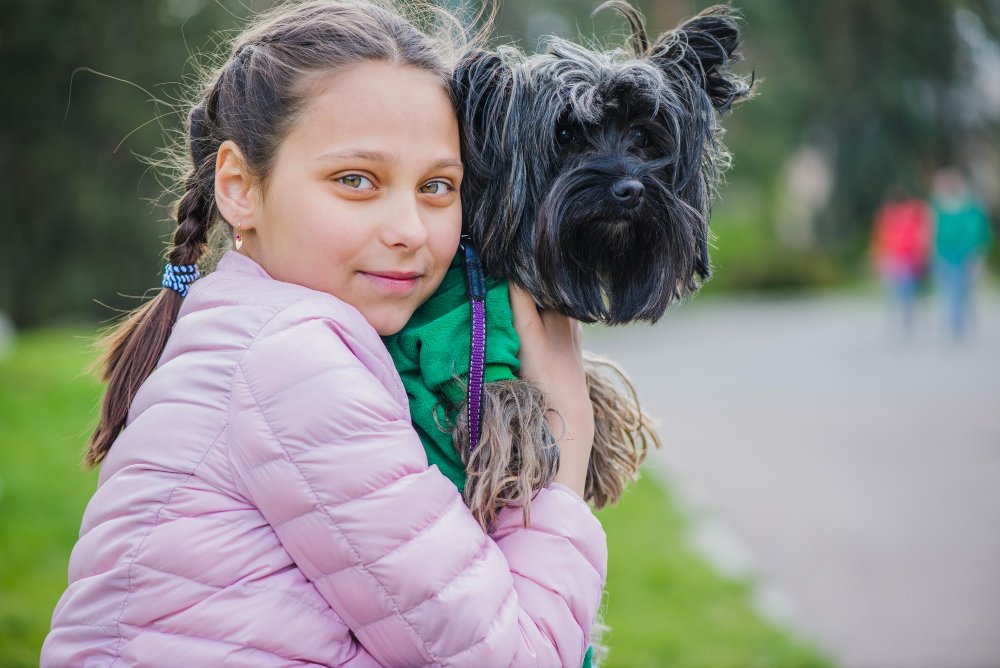
Owners often laugh off early warning signs — a low growl when a child reaches into their crate, stiffening when picked up, or moving away repeatedly — as quirky small-dog attitude. In reality, these are communication signals, and dogs who are repeatedly ignored when they signal discomfort often escalate to a nip because the "polite" warnings didn't work. This isn't the dog "turning" — it's the dog running out of lower-intensity options.
The Action Plan: Setting Kids and Affenpinschers Up to Succeed
1. Match the Dog to the Household Realistically
- Affenpinschers tend to do best with older, calmer children (generally school-age and up) who can understand and respect boundaries, rather than toddlers whose movements are unpredictable.
- If you have very young children, this breed can still work — but it requires more active management (see supervision section below), not less.
2. Teach Kids Concrete, Specific Rules — Not Just "Be Gentle"
Vague instructions don't stick. Specific, repeatable rules do:
- "Pet the back, not the face." Faces and paws are common trigger zones for small, reactive-leaning breeds.
- "Let sleeping dogs lie" — literally. No waking the dog by touch; call their name instead.
- "Two feet on the floor rule." No carrying, especially for kids under 8 — an Affenpinscher squirming out of small arms is a common injury source for both parties.
- "If the tail's tucked or the dog walks away, the game's over." Teach kids to recognize this as a stop signal, not a chase cue.
3. Manage the Environment, Not Just the Behavior
- Give the dog a designated safe zone (crate or bed) that is a strict no-kid-access area — this single step prevents a large percentage of resource-guarding or startled-response incidents.
- Feed the dog separately from high-traffic kid areas; food-guarding around children is one of the most common preventable triggers.
- Supervise all interactions directly for children under 6 — not "in the same room," but within arm's reach.
4. Train the Dog With Consistency (Not Just the Kids)
- Basic obedience (sit, stay, leave it) gives you a reliable way to redirect the dog before a situation escalates.
- Desensitize gradually to common kid-generated stimuli — sudden movement, loud noise, toys underfoot — using short, positive sessions rather than one overwhelming exposure.
- Reward calm behavior around children heavily and often; this builds a positive association rather than just suppressing reactivity.
A dog that's "trained" only in obedience commands but never desensitized to kid-specific chaos (running, shrieking, sudden hugs) is still at higher risk. Training needs to match the actual environment the dog lives in.
Life Stage Differences: What Changes Over Time
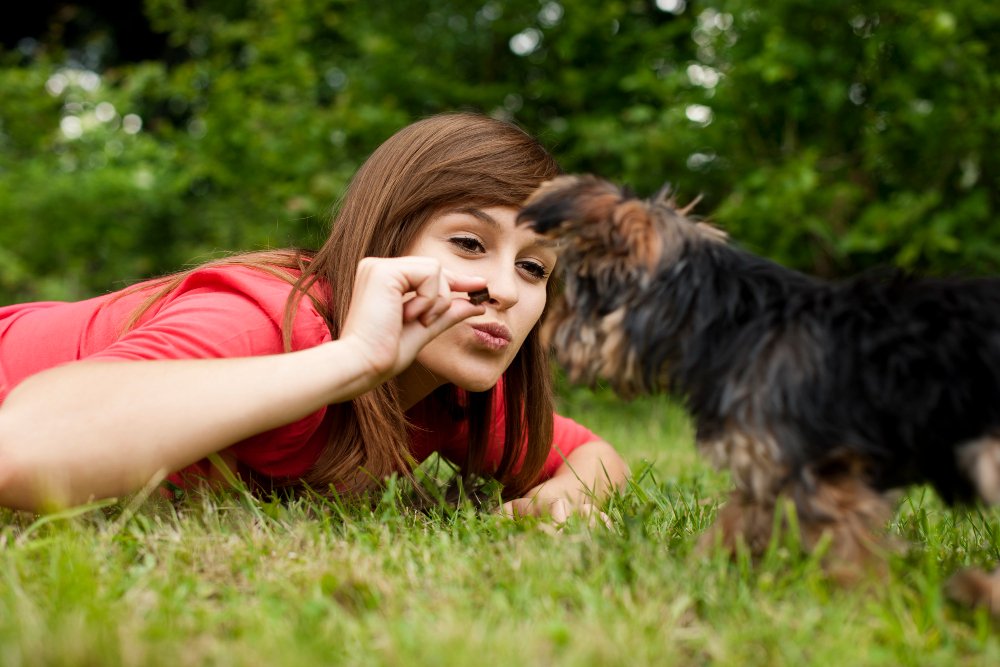
Puppies (0–12 months): This is the critical socialization window. Structured, positive exposure to calm, well-supervised kid interactions during this period significantly shapes adult temperament. Mismanaged or overwhelming early experiences with children can create lasting wariness.
Adults (1–8 years): Temperament is more established but still shaped by consistent rules. This is when household routines (safe zones, feeding boundaries) matter most for maintaining a stable, low-stress dynamic.
Seniors (8+ years): Older Affenpinschers often have lower tolerance for noise and handling, partly due to reduced sensory processing and potential joint discomfort. Increased supervision and gentler household energy become more important, even if the dog previously "loved" boisterous play.
Red Flags: When to Loop In a Professional
Most families can manage day-to-day dog-kid dynamics with consistent rules and supervision. But certain signs call for outside support.
See a veterinarian if you notice:
- Sudden irritability or snapping that's new or out of character (pain is a common hidden cause — small breeds are prone to dental disease and luxating patellas, both of which cause chronic discomfort that shows up as "grumpiness")
- Flinching or vocalizing when touched in specific areas
- Noticeable changes in appetite, energy, or mobility
See a certified dog trainer or behaviorist if you notice:
- Repeated growling, snapping, or biting directed at children despite consistent management
- Resource guarding (food, toys, or the crate) that isn't improving with separation strategies
- Signs of chronic stress around kids — hiding, panting, excessive yawning/lip-licking when children are present
A single growl is information, not an emergency — but a pattern of escalating warning signs that continues despite management changes is a clear signal to bring in professional support before an incident occurs.
Quick FAQ
Q: Are Affenpinschers naturally aggressive toward children?
No — they're not an inherently aggressive breed, but their terrier heritage gives them a lower tolerance for rough handling than some other small breeds. Good outcomes come down to management, training, and matching expectations to the dog's real temperament.
Q: What age of child is the best fit for this breed?
Generally, school-age children (roughly 7+) who can follow specific handling rules tend to have smoother relationships with Affenpinschers than toddlers, though younger kids can succeed with close, consistent adult supervision.
Q: Can training fully eliminate the risk of a nip or bite?
No training eliminates risk entirely — but consistent obedience training, desensitization, and household management dramatically reduce it. The goal is managing likelihood, not guaranteeing zero risk, which is true of any dog breed.
Q: Is it fair to the dog to bring an Affenpinscher into a home with young kids?
Yes, as long as the household is willing to provide structured supervision, a dedicated safe space for the dog, and consistent boundary-teaching for the children. Without that structure, it becomes unfair to both the dog and the kids.
The takeaway: An Affenpinscher's size might suggest "harmless," but their temperament asks for the same respect and structure you'd bring to any breed. Teach the rules, manage the environment, and watch the signals — and this feisty, affectionate little dog can absolutely be a great fit for a family with kids.


Comments
No comments yet. Be the first to share your thoughts.