
When Do Puppies Open Their Eyes? The Complete Week-by-Week Guide


Puppies open their eyes between 10 and 14 days old, though healthy pups from larger breeds may wait until day 21. Vision is blurry and light-sensitive at first, reaching near-adult clarity by 8–12 weeks. Never try to force a puppy's eyes open - the eyelids are sealed to protect tissue that is still actively developing, and forcing them causes permanent damage.
Key Takeaways
Puppies open their eyes between 10 and 14 days old - though some perfectly healthy pups wait until around day 21. The moment those tiny eyelids crack open is one of the most magical milestones in early puppy development, but it's just the beginning of a much bigger visual journey.
Here's what you need to know at a glance:
- Days 10–14: Most puppies begin opening their eyes
- Up to day 21: Still within the normal range - no cause for alarm
- After day 21 with no opening: Time to call your vet
- Full vision: Develops gradually through weeks 4–8
- Never try to force a puppy's eyes open - more on that below
Why Are Puppies Born with Their Eyes Closed?
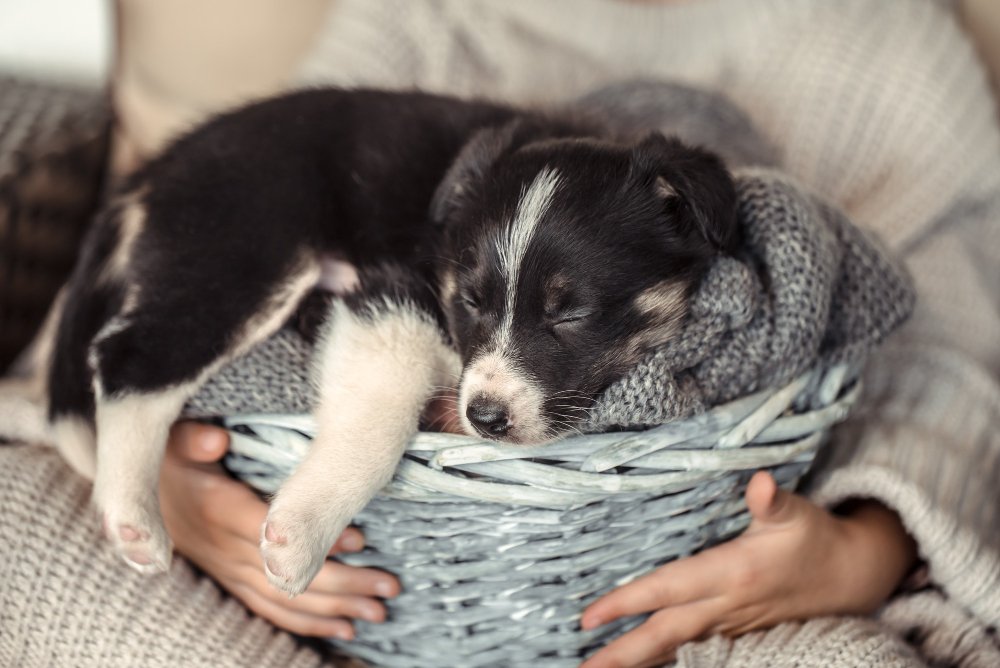
It seems almost counterintuitive. A puppy is born, and yet its eyes - arguably its most expressive feature - are completely sealed shut. What's going on?
The answer comes down to timing and biology. Dogs are what scientists call altricial animals, meaning their young are born in a relatively underdeveloped state and depend heavily on their mother after birth. Unlike a horse or deer that can stand and run within hours of birth, a newborn puppy is essentially a work in progress.
At birth, a puppy's eyes are still actively developing. The retina - the light-sensitive tissue at the back of the eye - hasn't finished forming. The optic nerve pathways that carry visual signals to the brain aren't ready to process images. Even the cornea, the clear front window of the eye, is still maturing and often appears slightly cloudy when the lids first separate.
Those fused eyelids aren't a flaw. They're a protective shield, keeping out bright light, dust, bacteria, and anything else that could damage the fragile eye tissue underneath while it finishes developing. Think of it as nature's own incubator - the eye is still being built, and the lid is the door that stays locked until construction is complete.
Here's the wild part: a puppy's ear canals are also sealed shut at birth, for exactly the same reason. The entire sensory system is still coming online. For those first two weeks, a newborn puppy navigates the world almost entirely through smell, touch, and warmth - which is all it needs to find its mother and littermates.
The Exact Timeline: What's Happening Day by Day
Watching a litter of newborn puppies develop is like watching a slow-motion miracle. Here's what's actually happening during those critical first three weeks.
|
|
|
|
|
|
|
|
|
|
|
|
|
|
|
|
|
|
|
|
|
|
|
|
One thing that surprises many new breeders and puppy watchers: puppies don't go from sealed shut to wide open overnight. The process is gradual - a sliver of light, then a narrow slit, then a slow, sleepy blink. It can take several days from first crack to fully open. And yes, it's completely normal for one eye to lead the other by a day or two.
The ear canals follow a similar schedule, opening around the same time the eyes do - which means week three is essentially when a puppy's entire sensory world explodes open at once.
What Do Puppies Actually See When Their Eyes First Open?

You might imagine a puppy's first glimpse of the world as a Hallmark moment - bright, clear, and full of wonder. The reality is a little more humble, and honestly, even more fascinating.
When a puppy's eyes first open, it sees almost nothing clearly. The world is blurry, dim, and washed in blue-gray tones. The retina is still developing, and the neural pathways between the eye and the brain haven't been fully calibrated yet. A newly opened puppy eye is less like a camera and more like a camera that's still being assembled.
Here's what the science tells us about early puppy vision:
- Blurry at first: Objects are indistinct and lack sharp edges. A puppy can detect light and movement but can't make out faces or details.
- Blue-gray tint: Most puppies have blue-gray eyes when they first open - regardless of what color they'll eventually be. The iris pigment hasn't fully developed yet. True adult eye color usually settles in by 9–12 weeks.
- Highly light-sensitive: The immature eye is easily overwhelmed by bright light. This is why you should keep newborn puppies in low, gentle lighting and absolutely avoid camera flash photography around them.
- No depth perception yet: Spatial awareness develops gradually over the following weeks.
By around 4 to 5 weeks, puppies start tracking moving objects and responding to visual cues. By 8 to 12 weeks, vision is approaching adult-level clarity. It's a remarkable transformation - from sensing only light and shadow to navigating the full visual world in just two months.
Does It Vary by Breed?
Short answer: yes, a little - but not as much as you might think.
The 10–21 day window applies across all dog breeds, from Chihuahuas to Great Danes. That said, there are some general tendencies worth knowing about.
Smaller breeds tend to open their eyes slightly earlier, often closer to the 10-day mark. Larger and giant breeds tend to lean toward the later end of the range, sometimes not fully opening until closer to day 18–21. Some breeds, like Fox Terriers, are known to occasionally take the full three weeks.
Here's a rough guide by size:
|
|
|
|
|
|
|
|
|
|
|
|
|
|
|
Important caveat: Individual variation within a breed matters far more than breed size alone. Even within the same litter, one puppy might open its eyes on day 10 while its sibling waits until day 17. Both are perfectly normal. The number to remember is 21 days - that's the outer limit of "wait and see."
Warning Signs: When to Worry
Most of the time, puppy eye development is completely uneventful. But there are a handful of situations where you should pick up the phone and call your vet - and some of them are more urgent than they look.
Call your vet if you see any of these:
If anything below sounds familiar, don't wait - find a vet near you and get eyes on the puppy today.
Eyes still sealed after day 21. If a puppy's eyes haven't started opening at all by three weeks old, that's beyond the normal range and warrants a professional check.
Swelling or bulging under closed lids. This is one of the most urgent signs. It can indicate that pus or fluid has become trapped behind the sealed eyelid - a condition that can cause permanent eye damage if not treated quickly. Don't wait.
Yellow, green, or cloudy discharge. A small amount of clear or slightly crusty discharge can be normal as the eyes first open. But anything that looks like pus - yellow, green, or opaque - signals a possible infection.
One eye open, one still sealed with swelling. Asymmetry alone isn't alarming (one eye often opens before the other), but if the sealed eye looks swollen or feels firm, get it checked.
Redness, squinting, or excessive blinking after opening. Once the eyes are open, they should look relatively clear and comfortable. Persistent squinting, redness, or a puppy that keeps pawing at its face suggests irritation or a corneal issue.
A foul smell around the eye area. This is a red flag for infection and should be treated as urgent.
The good news: most of these conditions are very treatable when caught early. The key is not waiting to see if it resolves on its own.
What NOT to Do: Never Force a Puppy's Eyes Open
This one deserves its own section, because it's a mistake that well-meaning people make - and the consequences can be devastating.
Never, ever try to pry or force a puppy's eyes open. It doesn't matter how gently you think you're doing it. The eye tissue underneath is extraordinarily fragile and still actively developing. Forcing the lids apart before the eye is ready can cause:
- Permanent corneal damage - scratches or tears on the surface of the eye
- Retinal injury - sudden light exposure to an immature retina can cause lasting harm
- Infection - introducing bacteria to an eye that isn't yet equipped to defend itself
- Scarring of the eyelid tissue itself
There is no safe way to speed up this process. The eyelids will open when the eye is ready - and not a moment before. If you're concerned about the timeline, the only right move is to call your veterinarian.
Similarly, don't use human eye drops, saline solutions, or any other product on a puppy's eyes without explicit veterinary guidance. What's safe for adult dogs or humans may not be appropriate for a newborn puppy's developing eye.
If there's mild crusting around the eye area (not swelling, not discharge - just a little dried crust), you can very gently wipe the outer lid area with a warm, damp cloth. But this is not a substitute for veterinary care if anything looks abnormal.
What Comes Next: The Socialization Window Opens Too
Here's something that doesn't get talked about enough: the moment a puppy's eyes open marks the start of one of the most important developmental periods in its entire life.
Around week three, something remarkable happens. The eyes open. The ears open. And suddenly, a puppy that was operating on pure instinct begins to experience the world. This is the beginning of the critical socialization period - and it's arguably more important for a dog's long-term behavior than any training you'll ever do.
Weeks 3–12 are the golden window for shaping how a puppy relates to the world. During this time, the brain is uniquely primed to form positive associations with new people, animals, sounds, surfaces, and environments. Experiences during this window have a disproportionately large impact on adult temperament.
Here's why this matters so much:
- Weeks 3–5: Puppies begin exploring and can start forming early bonds with humans. Gentle handling by multiple people during this phase pays dividends for years.
- Weeks 5–7: Social learning with littermates is at its peak. This is when bite inhibition, play skills, and canine communication develop. Separating puppies too early from their litter disrupts this.
- Weeks 7–12: The window widens to include the broader world - new environments, sounds, textures, and experiences. Positive exposure now reduces fearfulness later.
The American Veterinary Society of Animal Behavior (AVSAB) emphasizes that the socialization period is a limited window that closes, and that under-socialized puppies are at significantly higher risk of fear-based behavior problems as adults.
So when those tiny eyes crack open at day 10 or 14, it's not just a cute milestone. It's the starting gun for one of the most consequential developmental sprints in your dog's life. The breeders and caregivers who understand this - and act on it - raise dogs that are calmer, more confident, and more adaptable for life. Curious how those early weeks ripple forward? See how breed and early development shape the full picture in our guide to how long dogs live by breed.
Want to track every milestone from eye-opening to first bark? Use our puppy development tracker to follow your pup's progress week by week.
Frequently Asked Questions
When do puppies open their eyes exactly?
Most puppies begin opening their eyes between 10 and 14 days old. Some open as early as day 7, while others - particularly larger breeds - may wait until day 18–21. Any puppy whose eyes haven't started opening by day 21 should be seen by a veterinarian.
Is it normal for one eye to open before the other?
Yes, completely normal. It's very common for one eye to open a day or two before the other. As long as there's no swelling, discharge, or bulging under the still-closed lid, there's no cause for concern.
What color are puppies' eyes when they first open?
Almost all puppies have blue or blue-gray eyes when they first open, regardless of their eventual adult eye color. The iris pigment hasn't fully developed yet. True adult eye color typically becomes clear by 9–12 weeks of age.
Can I help a puppy open its eyes faster?
No - and you shouldn't try. The eyelids are sealed for a reason: the eye is still developing underneath. Attempting to force them open can cause permanent corneal damage, retinal injury, or infection. The only safe approach is patience and, if you're concerned, a call to your vet.
Why does my puppy's eye look cloudy after opening?
A slightly cloudy or hazy appearance right after opening is normal. The cornea is still maturing and may look a little foggy at first. This typically clears up within a few days. If cloudiness persists, worsens, or is accompanied by discharge or squinting, have a vet take a look.
What should I do if a puppy's eye looks swollen before it opens?
Contact your vet promptly. Swelling under a sealed eyelid can indicate trapped fluid or infection - a condition called neonatal ophthalmia - which can cause permanent damage if not treated quickly. This is one situation where waiting is not the right call.
When do puppies get full vision?
Puppies begin to see clearly in a functional sense around 4–5 weeks, but full adult-level visual acuity develops gradually through 8–12 weeks. Even after the eyes open, the retina and neural pathways continue maturing for several weeks.
Should I keep the lights dim around newborn puppies?
Yes. Newly opened eyes are very sensitive to bright light. Keep the whelping area in gentle, low-level lighting, and avoid using camera flash around puppies younger than 4–5 weeks. Sudden bright light can be uncomfortable and potentially harmful to immature eyes.
Useful Sources
These authoritative sources informed this article and are worth bookmarking for any puppy caregiver:
- Whole Dog Journal - When Will Newborn Puppies Open Their Eyes? - Practical guidance from one of the most trusted names in dog health journalism.
- Merck Veterinary Manual - Eye Structure and Function in Dogs - The clinical reference standard for canine eye anatomy and development.
- American Kennel Club (AKC) - Puppy Socialization - Expert guidance on the critical socialization window that begins when eyes open.
- American Veterinary Society of Animal Behavior (AVSAB) - Puppy Socialization Position Statement - The definitive professional statement on why early socialization matters.
- UC Davis School of Veterinary Medicine - Puppy Socialization - Research-backed overview of developmental stages in young


Comments
No comments yet. Be the first to share your thoughts.