
Can Maine Coons Live Comfortably in a Small 1-Bedroom Apartment? A Vet-Backed Guide


Here's a myth worth retiring immediately: big cat, big house. It feels intuitive — Maine Coons can weigh nearly 20 pounds and stretch over three feet long, so surely they need a sprawling home to match. But that logic misunderstands how cats actually experience their environment. A Maine Coon doesn't measure comfort in square feet. They measure it in height, choice, and predictability.
That's the core philosophy this whole guide rests on: a small apartment isn't automatically a bad home for a Maine Coon. A poorly designed apartment is.
The "Why": What's Actually Happening in a Cat's Environmental Map
Cats — regardless of breed or size — are ambush predators wired for a very specific relationship with space. Understanding this changes everything about how you set up a home.
Cats think in 3D, not 2D. Where humans assess a room by floor area, cats build a mental map based on elevation and vantage points. A cat perched on top of a bookshelf isn't just relaxing — they're satisfying a deep, instinct-level need to observe their territory from a position of safety. This is why a 650-square-foot apartment with a tall cat tree can feel more spacious to a cat than a 2,000-square-foot house with bare walls and no climbing options.
Territory is about "zones," not total area. Behaviorally, cats divide their environment into functional zones: a resting zone, a feeding zone, a scratching/marking zone, a hiding zone, and a lookout zone. What stresses cats isn't a small home — it's when these zones overlap or don't exist at all (like when the litter box sits right next to the food bowl).
Predictability lowers baseline stress. Cats are highly sensitive to unpredictability. A same-sized space with a consistent routine and clear resource access will produce a calmer cat than a larger space with chaotic scheduling or constant environmental change.
The Common Mistake: Misreading Boredom as "Bad Behavior"
This is where a lot of well-meaning owners go wrong. A Maine Coon who is:
- Knocking things off shelves at 6 a.m.
- Yowling in the hallway at night
- Scratching furniture instead of their post
- Overgrooming or seeming "clingy" to the point of frustration
...is very often under-stimulated, not spiteful or "too big for the apartment." Maine Coons are an unusually intelligent, working-heritage breed (they were originally barn and ship cats, valued for problem-solving). Confining that brainpower without outlets is what creates apartment-living friction — not the walls themselves.
The Action Plan: Designing a Small Space That Actually Works
1. Build Up, Not Out
Since floor space is your limiting factor, elevation is your biggest tool.
- Install 2–3 wall-mounted shelves or a "cat highway" leading to a high perch (bookshelf, wardrobe top, windowsill).
- Place at least one tall, sturdy cat tree — Maine Coons are heavy, so wobbly towers get abandoned fast.
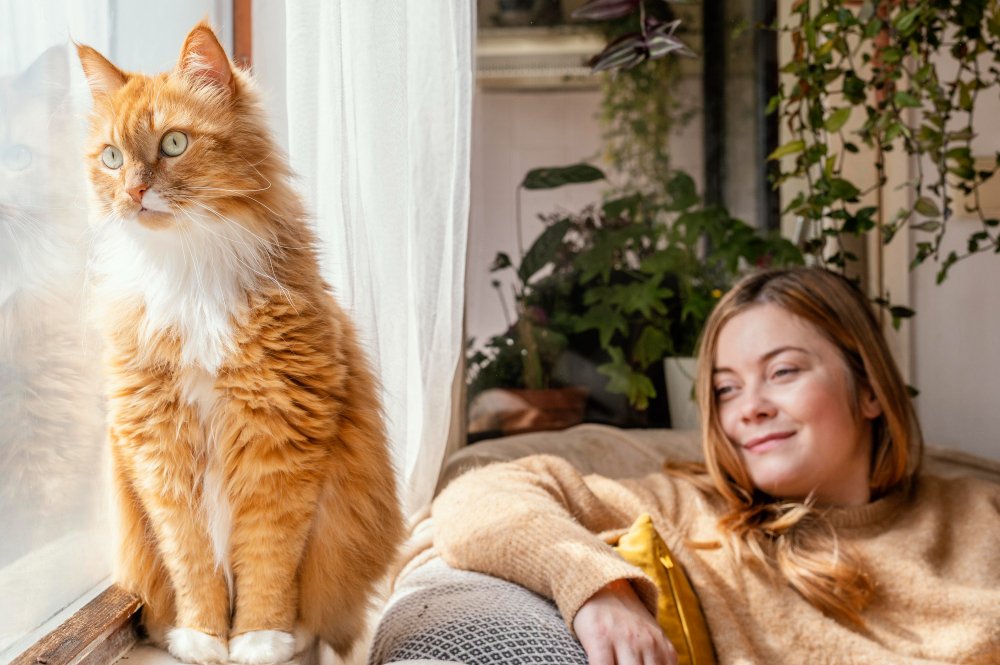
- Add a window perch near a bird feeder or street view for passive sensory enrichment throughout the day.
Callout: A cat who has "vertical options" uses roughly the same square footage far more efficiently — think of it as adding a second and third floor to a studio apartment.
2. Feed Their Brain, Not Just Their Bowl
Skip the "just give them enrichment" advice — here's what that actually looks like:
- Scatter-feeding: toss a portion of kibble across a towel or low-pile rug so they forage instead of eating from a bowl in three seconds.
- Snuffle mats: a 10-minute session before you leave for work can meaningfully reduce boredom-driven vocalizing.
- Puzzle feeders: rotate 2–3 different styles weekly so novelty doesn't wear off.
- Frozen treat "hunts": freeze a few treats in an ice cube tray and let them work the ice down — great for hot days and slow mental engagement.
3. Replicate the Hunt, Every Day
Maine Coons need the full predatory sequence — stalk, chase, pounce, "kill," eat — not just chasing a laser dot (which offers no resolution and can actually increase frustration over time).
- Two 8–10 minute wand-toy sessions daily (morning and evening work well with most schedules).
- End each session by letting them "catch" the toy, followed immediately by a small treat or meal — this mimics a successful hunt and helps them wind down instead of staying wound up.
4. Respect Their Need for Retreat
Even social, people-oriented Maine Coons need an escape hatch.
- A covered bed, closet shelf, or box tucked under furniture gives them somewhere to fully decompress.
- In small apartments, this matters more, not less, because there's simply less physical distance from household noise, guests, or other pets.
5. Solve the Litter Box Puzzle Creatively
The standard rule — one litter box per cat, plus one extra — feels daunting in a studio, but it's manageable:
- Furniture-style litter box enclosures double as side tables.
- A repurposed closet or bathroom corner keeps boxes away from food/rest zones without eating living space.
- Keep boxes uncovered if possible; covered boxes trap odor, which can be a bigger issue in small, less-ventilated apartments.
Life Stage Differences: What Changes Over Time
Kittens (0–12 months): Highest energy, highest need for structured play and supervised climbing (their coordination is still developing, so falls from tall trees are more common). Short, frequent play bursts work better than long sessions.
Adults (1–10 years): Peak physical capability — this is when a strong vertical setup and daily hunt-style play matter most. Most apartment-related behavior issues show up in this stage if enrichment is inconsistent.
Seniors (10+ years): Mobility often declines gradually, and owners sometimes mistake this for "settling down" when it's actually discomfort (early arthritis is common in large-breed cats). Ramps to favorite perches, low-entry litter boxes, and orthopedic bedding become more important than climbing height.
Red Flags: When to Loop In a Professional
Most apartment-adjustment behaviors resolve with consistent enrichment within a few weeks. But some signs point to something beyond a DIY fix.
See a veterinarian if you notice:
- Sudden changes in litter box habits (straining, going outside the box, frequency changes)
- Noticeable stiffness, reluctance to jump, or limping — especially in adult/senior Maine Coons, who have a higher predisposition to hip dysplasia and hypertrophic cardiomyopathy (HCM)
- Excessive grooming to the point of bald patches or skin irritation
- Significant appetite or weight changes
See a certified feline behaviorist if you notice:
- Persistent aggression toward you, guests, or other pets
- Anxiety behaviors (hiding constantly, panting, excessive drooling) that don't improve with added enrichment
- Destructive scratching or vocalizing that continues despite a consistent enrichment routine for 3–4 weeks
???? Callout: Behavior changes that appear suddenly (versus gradually) are more likely to have a medical root. When in doubt, rule out physical causes before assuming it's purely behavioral.
Quick FAQ
Q: Is a 1-bedroom apartment cruel for a Maine Coon?
No — evidence from feline behavioral science points to enrichment quality, not square footage, as the primary driver of feline wellbeing. A well-designed small space outperforms a large, understimulating one.
Q: Do Maine Coons need a yard or outdoor access?
Not necessarily. Supervised access (a secure catio or leash-trained walks, which many Maine Coons take to well) adds enrichment, but it's a bonus, not a requirement, if indoor vertical and mental stimulation needs are met.
Q: How much daily playtime does an apartment-dwelling Maine Coon really need?
Aim for at least 15–20 minutes of active, hunt-style play split across two sessions, plus passive enrichment (window perches, puzzle feeders) throughout the day.
Q: Will a second cat help or hurt in a small space?
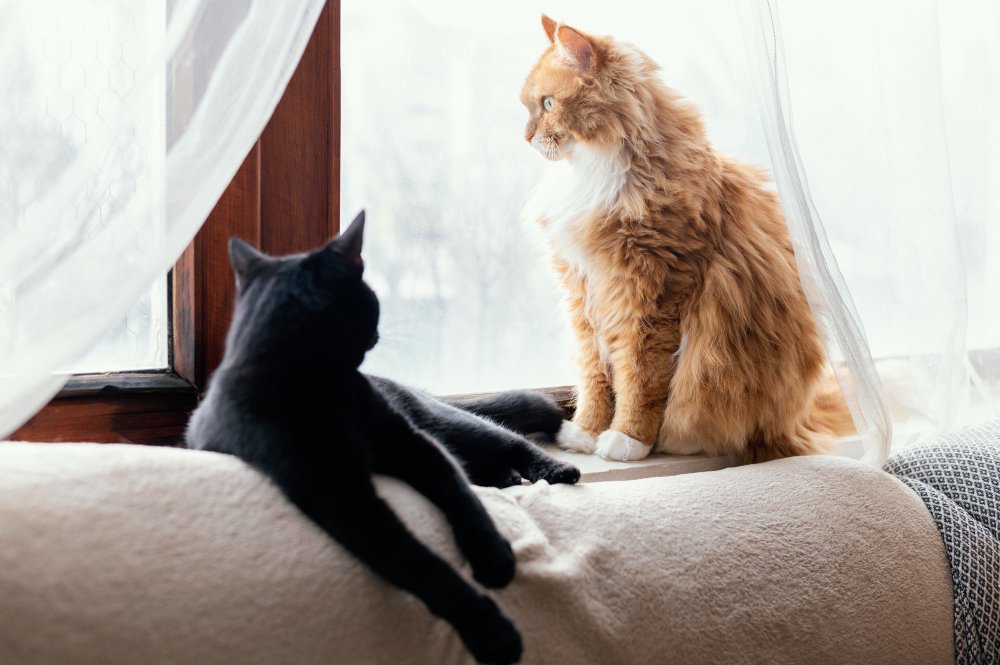
It depends entirely on introductions and resource availability. Done well, companionship can reduce boredom; done poorly (rushed introductions, insufficient resources), it can raise stress for both cats. If considering it, plan for extra litter boxes, feeding stations, and vertical space before bringing a second cat home.
The takeaway: Your Maine Coon isn't asking for more square feet. They're asking for more dimension — height to climb, problems to solve, and a predictable rhythm to their day. Get those right, and a 1-bedroom apartment can be every bit as enriching as a house with a yard.


Comments
No comments yet. Be the first to share your thoughts.